
Logistics Development in Central Vietnam: Strategic Momentum and the Road Ahead

Amid the global restructuring of supply chains and the acceleration of digital transformation across economies, logistics development in Central Vietnam is emerging as a strategic priority for Việt Nam. The region's transportation infrastructure, geographical positioning, and expanding industrial base are creating a foundation for Central Việt Nam to become a critical transit, distribution, and export gateway. This direction is expected to be strongly emphasized during the Vietnam Logistics Forum 2025, taking place on November 28–29 in Đà Nẵng.
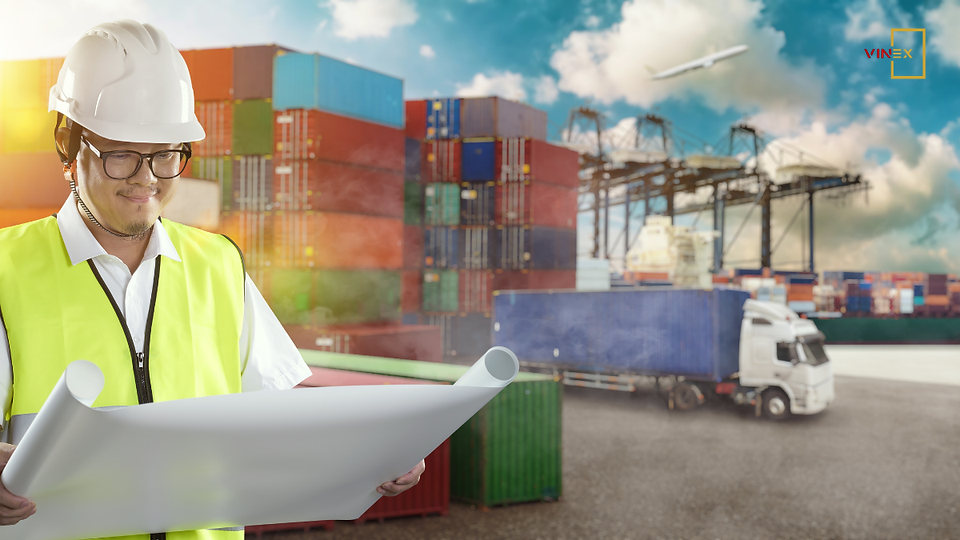
Central Vietnam is shaping into a new regional logistics gateway.
The Forum is organized annually by the Ministry of Industry and Trade through the Foreign Trade Agency, and for over twelve editions, it has maintained its reputation as one of Việt Nam’s leading logistics and trade connectivity events. It gathers governmental departments, local authorities, businesses, academics, and international partners to discuss logistics strategies and new growth models. The 2025 theme, “Vietnam Logistics – Rising into the New Era,” reflects not only continuity in national policy but also a marked aspiration to elevate the country’s logistics sector as a pillar of sustainable economic development.
Logistics Development in Central Vietnam and Its Strategic Role in Regional Connectivity
Central Việt Nam possesses a geographic advantage that few regions can replicate. It lies not only along the industrial spine of Việt Nam but also at the heart of the East–West Economic Corridor, which links Việt Nam with Laos, Thailand, and Myanmar. This corridor is uniquely important because it provides inland regions of mainland Southeast Asia with access to the East Sea, facilitating international maritime trade. As supply chains become more decentralized and regionalized due to shifts in global manufacturing and transport patterns, this position places Central Việt Nam in a role of rising influence.
Đà Nẵng, in particular, is emerging as the core of the Da Nang logistics hub, where the convergence of infrastructure projects is expected to reshape the regional logistics landscape. The development of Liên Chiểu Port into a deep-water seaport capable of receiving large container vessels represents a turning point. Together with the modernization of Tiên Sa Port, the expansion of Đà Nẵng International Airport, and the strengthening of North–South highway networks, the city is positioning itself as a multi-modal logistics gateway. These elements, when fully harmonized, will allow Central Việt Nam to support not only domestic cargo movement but also international transshipment.
Vietnam Logistics Forum 2025: Direction, Participation, and Vision
The Vietnam Logistics Forum 2025 will take place over two days. The first day includes field visits to ports and logistics centers in Đà Nẵng. These visits are not merely symbolic; they offer policymakers, investors, and industry leaders a direct understanding of infrastructure readiness and potential investment opportunities. The second day begins with a plenary session attended by the Prime Minister, representatives of ministries, industry associations, and local administrations. Discussions will center on national logistics policies, institutional reforms, infrastructure planning, supply chain modernization, and the integration of logistics with manufacturing and export activities.
The afternoon workshop, titled “Finding Opportunities for Breakthrough Logistics in the Central Region,” will shift focus to the region’s prospects. The workshop is expected to highlight the importance of cooperation models that involve both domestic regions and international partners, especially Laos and Thailand. By strengthening these cross-border linkages, Central Việt Nam could become an anchor of circulation for goods across the Mekong region. The dialogue will also emphasize the need for self-reliance, innovation in logistics services, and strategic coordination among local governments, port authorities, and logistics enterprises.
Unlocking a Sustainable and Integrated Logistics Ecosystem
To fully unlock logistics development in Central Vietnam, the region must advance past traditional transport-based logistics and move toward a high-value ecosystem where transportation is tightly integrated with warehousing, digital services, customs facilitation, and supply chain intelligence.
This means that the development of ports alone will not be sufficient. Efficient logistics today depends on the ability to integrate road, sea, air, and potentially rail transport into unified service networks that reduce delivery times and optimize operational costs. Digital transformation—through electronic customs procedures, smart port systems, IoT-based cargo tracking, and real-time warehouse management—is equally critical. Without technological synchronization, even well-developed infrastructure may underperform.
There is also a growing alignment between logistics expansion and the manufacturing strategies of the region. As Central Việt Nam continues to attract foreign direct investment in sectors such as electronics, apparel, mechanical components, and high-value manufacturing, the demand for advanced logistics services—including cold chain logistics, bonded warehousing, e-commerce fulfillment, and re-export centers—will continue to expand. Logistics development and industrial growth are therefore mutually reinforcing; progress in one accelerates the other.
A New Phase of Growth for the Central Region
The momentum behind logistics development in Central Vietnam marks an important transition in Việt Nam’s long-term development strategy. With its unique position on the East–West Economic Corridor and the emerging capacity of the Da Nang logistics hub, Central Việt Nam is demonstrating the potential to become not only a domestic logistics center but also an international gateway for trade flows in the broader Mekong region.
The Vietnam Logistics Forum 2025 is more than a routine event; it serves as a platform to align policy vision, business collaboration, infrastructure investment, and strategic planning. It allows stakeholders to collectively shape a future where logistics is not merely an auxiliary service but a key economic driver.
If effectively integrated and strategically guided, Central Việt Nam can rise as a competitive, sustainable, and globally connected logistics region, contributing to elevating Việt Nam’s position within international supply chains.
Conclusion
The trajectory of logistics development in Central Vietnam signals the emergence of a new strategic growth axis for the national economy. With Đà Nẵng positioned at the heart of the East–West Economic Corridor, supported by port upgrades, airport expansion, and multimodal transport connectivity, the region holds the capability to transition from a regional transit point into a globally connected logistics hub. The Vietnam Logistics Forum 2025 will be a decisive moment for policy alignment, infrastructure coordination, and cross-border collaboration—laying the foundation for a more resilient, efficient, and future-ready logistics ecosystem.
As Central Việt Nam moves into this new phase, the success of the region will depend on the ability of government bodies, private enterprises, financial partners, and logistics service providers to work together, innovate together, and grow together. The momentum is already forming; what comes next will shape the long-term competitiveness of Việt Nam within regional and global supply chains.
Want to move before the market moves?
Don’t wait for the opportunity to mature — claim your position now.
Contact Vinex: +84 981 111 811
Comments