
Key National Energy Programs and Projects in Vietnam’s Energy Sector

Vietnam’s energy sector is entering a strategic transition period as the country rebalances its power structure to meet growing demand while progressing toward its net-zero carbon emissions by 2050 commitment. Today, Vietnam still relies heavily on coal-fired power plants to maintain national grid stability. However, the rising focus on hydropower, solar, wind, and natural gas signals a clear strategic direction: the shift toward a low-carbon, sustainable energy future.
Ensuring the success of this transition requires strong governance, integrated planning, major infrastructure investments, and policy coordination across ministries. In November 2024, Vietnam took a major institutional step forward by establishing the State Steering Committee for Key National Programs, Projects, and Works in the Energy Sector, a national-level body responsible for directing, monitoring, and resolving obstacles related to the implementation of critical energy projects. This committee plays an essential role in driving key national energy programs Vietnam needs to secure long-term supply stability and sustainable development.
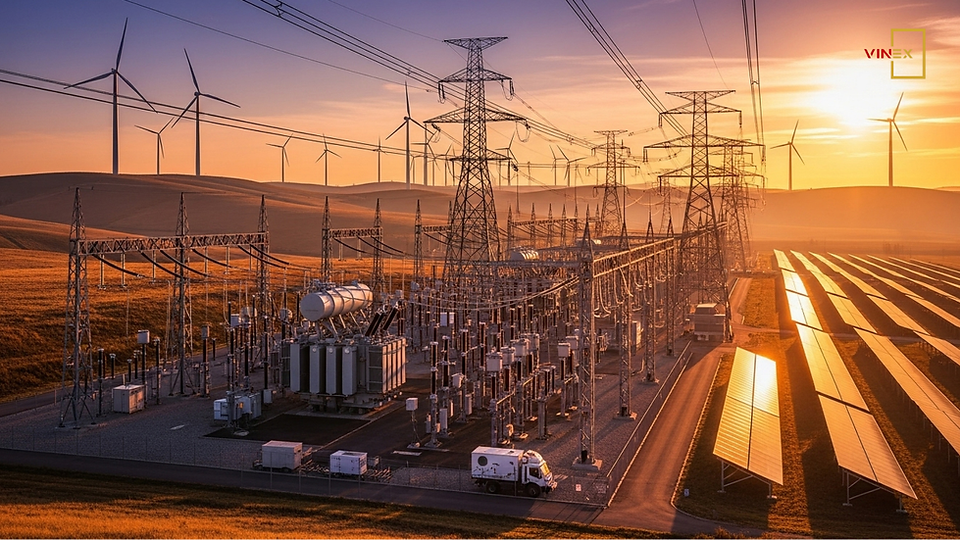
Vietnam’s shift toward solar and wind power under key national energy programs.
Rising Electricity Demand and Key National Energy Programs in Vietnam
Vietnam’s rapid industrialization and economic modernization are the primary drivers of expanding electricity demand. Manufacturing, logistics, data centers, and export-driven industries increasingly require reliable, high-capacity energy infrastructure.
Between 2021 and 2030, national electricity demand is forecast to grow by over 8% per year—one of the fastest rates in Asia.
Year | Estimated Electricity Demand (TWh) |
2020 | 265–278 TWh |
2030 | 572–632 TWh |
To support this demand growth, the country must significantly expand its installed capacity:
Year | Required Installed Capacity (MW) |
2020 | ~60,000 MW |
2025 | ~96,500 MW |
2030 | ~129,500 MW |
This means Vietnam must add roughly 6,000 to 7,000 MW each year, equivalent to building multiple large power plants annually. According to estimates, achieving this expansion will require about USD 148 billion in investment by 2030.
The scale and pace of this expansion demonstrate that energy security is not just an economic issue—but a strategic national priority.
Vietnam’s Renewable Energy Development: Potential and Challenges
Vietnam is recognized as one of Southeast Asia’s most promising renewable energy markets. Abundant sunlight in the central and southern regions and strong coastal wind corridors provide high potential for solar and wind energy development.
However, while installed renewable capacity has increased quickly, actual power output remains inconsistent because solar and wind depend on weather conditions. Hydropower remains the most stable renewable source but faces environmental and geographical limits.
To sustain progress in the Vietnam energy transition, the country will require:
Investment Area | Funding Need (by 2030) |
Renewable Energy (solar, wind, hydro) | USD 23.7 billion |
Energy Efficiency (industrial optimization, grid upgrades) | USD 1.5–3.6 billion |
Moreover, the development of natural gas and LNG power plants is viewed as a transitional solution—reducing emissions compared to coal while supporting renewable energy intermittency.
In short, the path toward net-zero Vietnam 2050 depends on both renewable expansion and system flexibility.
Establishment of the State Steering Committee for Key National Energy Programs
On November 4, 2024, Prime Minister Pham Minh Chinh issued Decision No. 2433/QD-TTg, formally establishing the:
State Steering Committee for Key National Programs, Projects, and Works in the Energy Sector
This committee is tasked with leading and accelerating the implementation of vital energy infrastructure programs that influence Vietnam’s long-term power security and development strategy.
Committee Leadership Structure
Head: Deputy Prime Minister Bui Thanh Son
Permanent Deputy Head: Minister of Industry and Trade Nguyen Hong Dien
Deputy Head: Deputy Minister of Finance Nguyen Thi Bich Ngoc
Standing Agency: Ministry of Industry and Trade
This high-level structure demonstrates the strategic national importance of energy planning.
Mandates and Responsibilities
The Steering Committee’s responsibilities include:
Strategic Policy CoordinationAdvising the Prime Minister in forming strategic directions, regulatory adjustments, and inter-ministerial coordination frameworks for major energy programs.
Progress Monitoring and Project AccelerationEnsuring that key national energy projects stay on schedule, while identifying and removing bottlenecks.
Land Clearance and Administrative ResolutionMany energy projects face challenges related to site clearance and local-level permitting. The committee has authority to mediate and resolve such issues.
Inter-Regional and Inter-Sectoral OrganizationCoordinating among Ministries, provincial authorities, and state-owned enterprises to ensure coherent implementation.
Supporting Vietnam’s Energy Security and Transition StrategyAligning energy infrastructure development with both economic growth targets and long-term decarbonization goals.
In simple terms, the committee acts as the central command center for Vietnam’s energy development.
Why This Committee Matters for the Future
Vietnam stands at a strategic crossroads. The nation must simultaneously:
Ensure electricity security for industries and households
Maintain international competitiveness as a manufacturing hub
Fulfill global climate commitments
Balance environmental sustainability with economic growth
Attract large-scale renewable energy investment in Vietnam
Without unified management, energy development risks delays, inefficiencies, and supply instability.
The establishment of this Committee ensures that key national energy programs Vietnam can move forward under direct national-level oversight, minimizing delays and supporting stable long-term planning.
Conclusion
Vietnam’s energy sector is undergoing fundamental restructuring to support long-term growth and environmental goals. Meeting rising electricity demand will require massive investment, policy coordination, and rapid infrastructure expansion. The establishment of the State Steering Committee for Key National Energy Programs marks a decisive step in strengthening national governance and accelerating the transition toward a more secure, diversified, and sustainable energy future.
Need guidance on Vietnam’s energy investment framework?
Message Vinex — we support policy interpretation and project compliance.
Contact Hotline Vinex: +84 98 1111 811 or Email: contact@vinex.com.vn


Comments